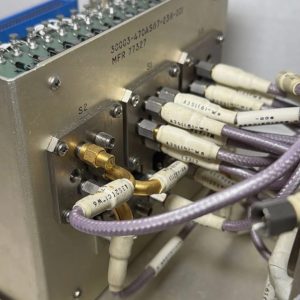
The Aviation Switching Module – NSN 4920-01-250-2696 (AS-IS / Untested) combines recognizable aviation hardware, an identifiable National Stock Number, potential electrical-control functionality, and commercial value for informed specialist buyers.
An Aircraft Switching Module and Aerospace Switching Module should be treated as specialized equipment rather than universal components that can be connected to any aircraft electrical system.
Whether buyers search for an Aircraft Electrical Switching Module, Aviation Electrical Control Module, Aircraft Power Switching Module, Aerospace Electrical Control Unit, or Aircraft Signal Switching Module, technical identification should guide the purchase.
Whether described as an Aviation Control Module, Aircraft Switching Unit, Aerospace Power Distribution Module, Aircraft Electrical Control Unit, or Aviation Power Control Module, the component should remain identified primarily by its NSN and physical markings.
Identifying the Aerospace Switching Unit
A matching NSN can improve identification, but it does not establish present condition, functional status, completeness, or suitability for a particular aircraft or test system.
Military or aviation-surplus components may carry replacement numbers, superseded numbers, modification markings, or contract identifiers that assist research.
Evaluating Surplus Aircraft Electronics
The buyer should plan for professional inspection, troubleshooting, repair, parts replacement, or display-only use.
An untested component should not be connected directly to aircraft wiring, expensive test equipment, batteries, laboratory supplies, or unknown power sources.
Choosing an Aircraft Switching Module
An Aircraft Switching Module may provide circuit selection, signal routing, controlled connection, isolation, mode selection, or interface functions within compatible aviation equipment.
A detailed visual inventory supports informed evaluation of the Aircraft Switching Module.
Maintaining a Switching Module Assembly
Careful exterior evaluation can reveal evidence of previous use or damage before the unit is opened.
Proper connector protection preserves the Aerospace Switching Module for future testing or restoration.
Electrical Switching Module Condition
An Aircraft Electrical Switching Module should be inspected for overheated areas, burned insulation, damaged terminals, loose hardware, corrosion, moisture entry, broken controls, and signs of previous disassembly.
Loose wires, nonstandard components, replaced relays, cut conductors, or evidence of field repair should be recorded.
Aircraft Electrical Control Applications
An Aviation Electrical Control Module can coordinate or select electrical functions within a compatible aviation or support-equipment system, depending on its documented design.
Aggressive solvents, scraping, repainting, or polishing may remove original information.
Aviation Power Circuit Management
Current capacity, voltage, duty cycle, contact type, protection requirements, and load characteristics should be confirmed before testing.
Any successful limited test should be documented precisely without changing the overall status beyond what was actually verified.
Choosing an Aerospace Electrical Control Unit
An Aerospace Electrical Control Unit may combine switching, control, indication, interface, or distribution functions within one enclosed assembly.
A common-looking relay, switch, resistor, connector, or wire may not be an acceptable substitute.
Aircraft Signal Switching Module Uses
Qualified evaluation supports responsible Aircraft Signal Switching Module use.
The module should not be modified with unshielded wiring or improvised connectors solely for convenience.
Aviation Control Module Applications
Clear intended use helps establish realistic expectations for an AS-IS Aviation Control Module.
A matching NSN or housing does not always confirm identical internal configuration when modifications or supersessions exist.
Commercial Value of an Untested Switching Unit
Detailed condition reporting supports fair commercial evaluation.
Responsible educational use can extend the value of the Aircraft Switching Unit.
Aircraft Electrical Distribution Hardware
A module should not be loaded electrically until contact condition, insulation, wiring, and circuit configuration are understood.
Bent brackets, enlarged holes, missing fasteners, or distorted mounting surfaces may complicate restoration.
Maintaining Legacy Aviation Control Equipment
An Aircraft Electrical Control Unit should receive an organized inspection covering identification, enclosure condition, connectors, controls, labels, hardware, internal components, and signs of environmental exposure.
Limited testing should not be described as complete serviceability verification.
Inspecting a Power Control Module
The seller should avoid presenting the module as compatible with commercial aircraft, helicopters, military aircraft, or UAVs without evidence.
Technicians should inspect for capacitors, transformers, relays, damaged insulation, or hazardous residues before opening or testing the unit.
Understanding an Aircraft Electronic Switching System
A systems approach supports more accurate troubleshooting and restoration.
A replacement AS-IS unit may provide useful comparative parts but should not be installed without evaluation.
Long-Term Storage of Aircraft Electronics
Connector caps should remain fitted, and the module should be supported without placing pressure on switches, knobs, cables, or mounting brackets.
Insured and trackable transportation supports responsible sales of specialized aviation hardware.
Buying AS-IS Aviation Electronics
The potential cost of connectors, manuals, test equipment, repairs, components, and specialist labor should be included in the buying decision.
Unknown information should remain clearly identified as unknown.
Aerospace Module Pre-Purchase Inspection
The AS-IS and untested condition should appear clearly within the title, description, invoice, and transaction website terms.
- Confirm that the identification plate shows NSN 4920-01-250-2696 and record every manufacturer number, serial number, contract marking, revision, and modification label.
- Inspect the enclosure for dents, cracks, corrosion, missing screws, altered holes, broken seals, damaged brackets, and signs of previous opening.
- Retain purchase records, photographs, labels, research, testing notes, and repair documentation with the module.
Safe Testing of an Aircraft Switching Unit
Testing should begin with identification research, visual inspection, connector mapping, safety review, and examination of available technical documentation.
The test should stop immediately if overheating, smoke, arcing, excessive current, unstable operation, or unusual odor occurs.
Documenting Aviation Electronics Restoration
Original labels, wiring routes, fasteners, finishes, and component locations should be preserved whenever practical.
Accurate records support future maintenance and responsible resale.
Selecting a Surplus Aerospace Switching Unit
For the right purchaser, the unit can offer a useful foundation for technical research, controlled troubleshooting, component recovery, or legacy-equipment restoration.
The component should be judged according to complete project suitability rather than clean appearance, military-surplus interest, part-number rarity, or price alone.
Whether the product is described as an Aircraft Switching Unit, Aerospace Power Distribution Module, Aircraft Electrical Control Unit, or Aviation Power Control Module, AS-IS limitations should remain clear.
With prompt attention to switches, connectors, wiring, enclosure condition, corrosion, labels, and internal components, the module can preserve its technical and commercial potential.